


LOCKERROOM is the Southeast’s leading athlete performance testing and event company. We’re proud to announce our upcoming integration with NCAA school compliance systems, making it easier for athletes to securely share verified performance data directly with college recruiters and coaches.
Lockerroom Insights / Athlete Performance Reports
· 3 min read
Athlete Performance Reports are an important tool for understanding an athlete’s development, strengths, weaknesses, and overall progress. Whether an athlete is competing in school sports, college athletics, or professional competition, performance data can provide valuable insights that help athletes and coaches make informed training decisions.
An Athlete Performance Report is a structured document that summarizes an athlete’s performance using measurable data, observations, and progress indicators. The report can cover physical abilities, technical skills, game performance, training consistency, and other factors relevant to the athlete’s sport.A well-prepared report transforms raw performance information into an easy-to-understand overview. It can help athletes identify areas that need improvement while highlighting achievements and positive development.
Depending on the sport and purpose of the report, an Athlete Performance Report may include:
For example, a soccer performance report could examine passing accuracy, shots, assists, defensive actions, speed, and match involvement. A track-and-field report may focus on times, distances, technique, and progression across competitions.
Performance reports make it easier to monitor development over time. Comparing current results with previous assessments can show whether an athlete is progressing toward established goals.
Reports can highlight areas where an athlete performs particularly well. Understanding these strengths can help coaches develop appropriate training strategies and help athletes recognize their competitive advantages.
Performance data can reveal specific areas requiring additional attention. Instead of relying solely on general observations, coaches can use measurable information to create more targeted training plans.
Athletes can use performance reports to establish realistic short-term and long-term objectives. Goals can be based on measurable indicators such as improving sprint times, increasing strength, improving accuracy, or maintaining greater consistency.
For student-athletes, organized performance information can contribute to a broader athletic profile. A clear record of achievements, statistics, development, and competition experience can help athletes communicate their athletic background to coaches and programs.
The greatest value of an Athlete Performance Report comes from using the information to guide future development.For example, if testing shows that an athlete has strong endurance but needs improvement in acceleration, the training program can place greater emphasis on appropriate speed and acceleration work. Future assessments can then be compared with earlier results to monitor progress.This creates a continuous process:Assess → Analyze → Set Goals → Train → Reassess → AdjustThis approach allows athletic development to become more structured and measurable.
Coaches can use performance reports to better understand individual athletes and teams. Reports may help coaches identify trends, monitor development, and organize training priorities.They can also provide a consistent way to communicate performance information with athletes and, where appropriate, parents, athletic departments, or development programs.
For student-athletes, performance reporting can be particularly useful because athletic development often takes place alongside academic and personal development.A comprehensive profile may include:
Keeping this information organized can make it easier for athletes to review their progress and prepare an accurate athletic profile.
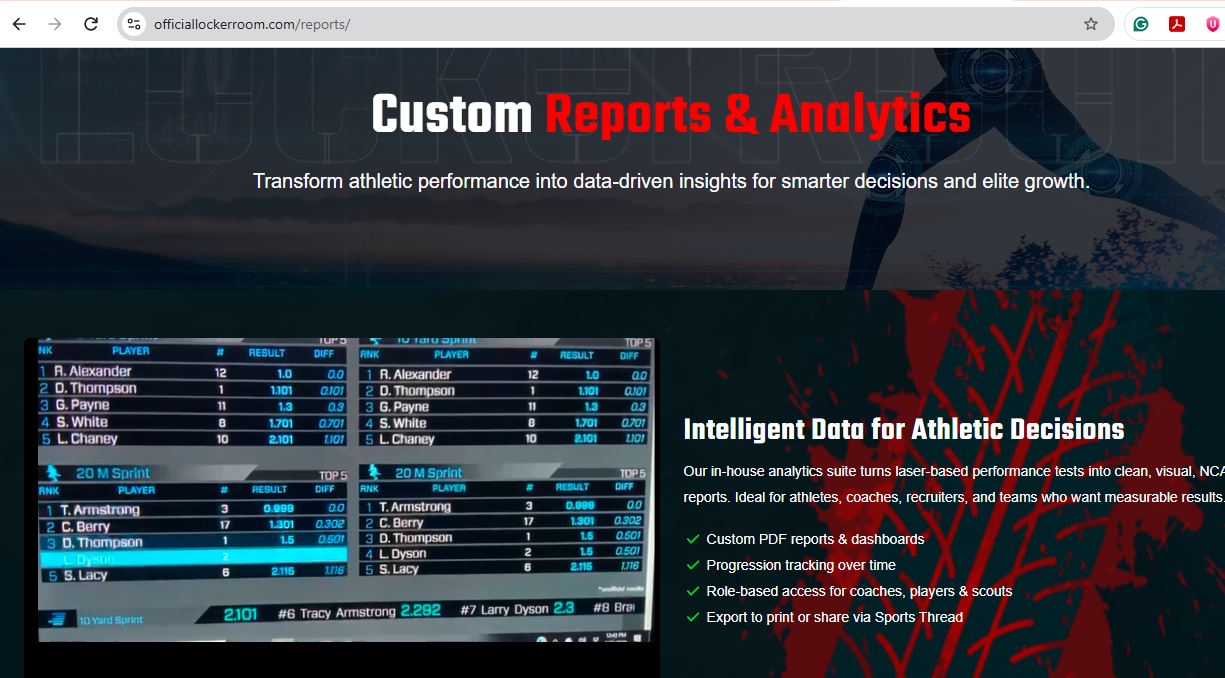
An effective report should be clear, objective, consistent, and actionable. Data should be presented in a way that athletes and coaches can easily understand.Instead of simply stating that an athlete "needs to improve speed," a useful report should identify relevant measurements and explain the development area. This makes the information more practical for future training.Charts, tables, progress comparisons, and written observations can also make performance reports easier to interpret.
Athlete Performance Reports provide a structured way to measure athletic development and turn performance information into useful insights. By tracking strengths, weaknesses, statistics, goals, and progress over time, athletes and coaches can create more focused development plans.For student-athletes especially, maintaining accurate performance records can help document their athletic journey and provide a clearer picture of their development, achievements, and future goals.